When a person goes quiet after a loss, or a coworker's breathing transforms rough and superficial, the clock starts to move differently. You feel the weight of every second. The difference between on call and stepping in boils down to prep work, and for lots of people that implies advancing beyond the fundamentals. Advanced first aid training is a commitment of time, focus, and often money, however it can place you in a position to change the trajectory of a crisis. The inquiry is whether you need it currently, or whether a strong first aid and CPR course suffices for your risks and responsibilities.
I have actually trained alongside institution staff, tradies, lifeguards, workplace managers, outdoor overviews, and new moms and dads. Their requirements seldom look the same. The ideal path relies on your setting, your comfort with hands-on skills, and just how frequently you intend to utilize them. Allow's make sense of the alternatives, the trade-offs, and the lived reality behind the marketing blur.
What "advanced" really means
First help training exists on a range. On one end rests a brief first aid course that covers bleeding control, burns, fractures, allergic reactions, and fundamental scene safety and security, coupled with a cpr course that instructs upper body compressions and rescue breaths. On the various other end you find wild medicine, advanced resuscitation, oxygen treatment, and components customized for remote worksites or high-risk atmospheres. Numerous suppliers also bundle first aid and cpr courses, and release a first aid certificate upon completion.
The word "advanced" hangs. Some organisations identify an extensive one-day first aid and cpr course as innovative because it adds circumstances or AED drills. Others reserve the term for programs that need you to handle complex air passage issues, carry out oxygen, or coordinate care over numerous hours when an ambulance is away. If you want to comprehend what you are buying, neglect the label and read the skill checklist:
- Scene management, triage, and interaction under stress Airway management past head-tilt and chin-lift, consisting of placing for believed spine injuries and suction technique where permitted Use of extra oxygen or bag-valve-mask gadgets when policies and your function allow Prolonged care and tracking for shock, hypothermia, heat health problem, and diabetic emergencies Complex trauma administration such as tourniquet use, injury packaging, and splinting with limited gear
These topics go beyond a basic first aid course. Not every region allows all abilities outside professional practice, so examine local policies. A great carrier will certainly be clear concerning range and when to stop.
Where you are issues more than what you call it
Context drives the skill set you require. In a home office with four-minute ambulance reaction times, the priority is fast recognition, high-quality cpr, and reliable use of an AED. Advanced pharmacology or wild procedures most likely add little bit there. Change to a wind ranch 2 hours from town, a school camp, or a cruising race, and the calculus modifications. You might be the only responder for an hour, with climate closing in and an individual whose bleeding will certainly not wait.
Consider oxygen treatment. Many sophisticated first aid courses include oxygen distribution for severe asthma, heart breast discomfort, or smoke inhalation. In practice, a retail shop attendant will certainly never ever release an oxygen cylinder, while a surf life saving team might rely on it weekly. The exact same is true for bag-valve-mask air flow. It is a crucial tool, however it needs training, synergy, and confidence you only construct with repetition.
Real circumstances that separate standard from advanced
I have seen basic skills conserve lives. A succinct cpr course created a workplace colleague that began compressions within 30 seconds when our accounting professional collapsed. The AED provided a shock, paramedics arrived in six minutes, and he went home 4 days later on. No advanced strategies were called for. Speed, clarity, and muscular tissue memory made the difference.
On a winter season walking in the varieties, we had a different scenario. A pedestrian slipped on shale, suffered a deep laceration near the knee, and revealed early signs of shock. The closest roadway was 90 minutes away. We used a tourniquet to CPR Near Me Sydney regulate the blood loss, loaded the wound with gauze, boosted the limb, insulated the client head to toe, and checked pulse and mental status. We tracked time, adjusted the tourniquet, and radioed works with two times as conditions moved. That mix of decision production and prolonged care is the district Provide First Aid Course Mawson Lakes of sophisticated training. No person panicked due to the fact that we had practiced.
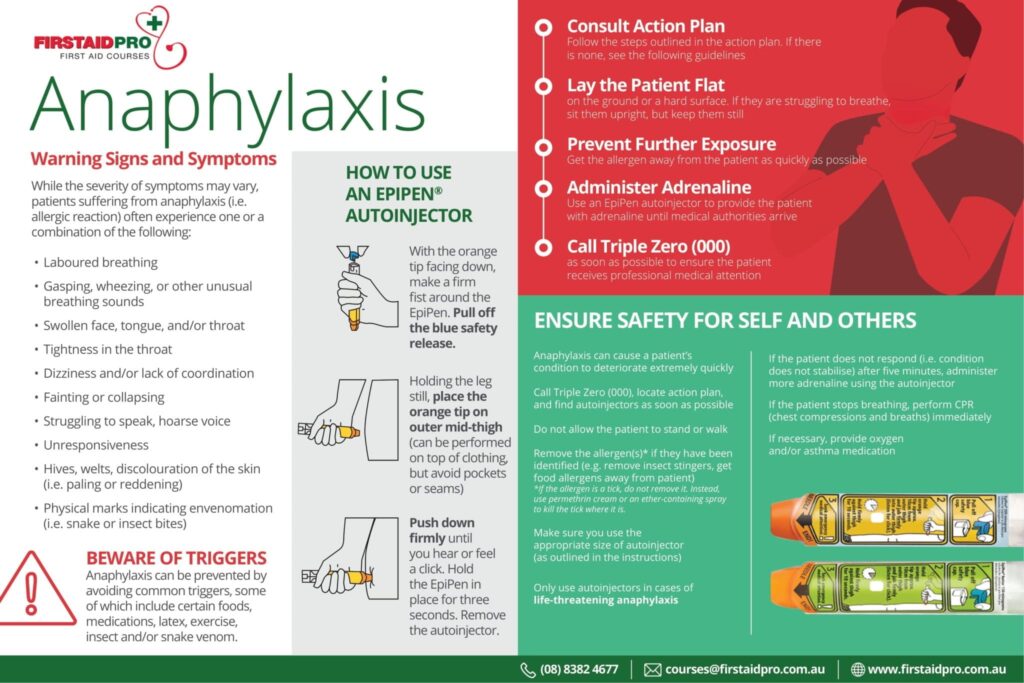
Another edge case shows up throughout serious bronchial asthma assaults. Fundamental training covers inhaler spacers and acknowledgment of breathing distress. Advanced courses might add oxygen management and surveillance for fatigue, mentor you how to sustain a client that looks "far better" because they are also worn out to keep fighting to breathe. Recognizing when to call for back-up earlier than your satisfaction desires is additionally part of being advanced.
How to judge your requirement without guesswork
Start with danger, then obligation. If your duty assigns you as the first aid pro on website, or you handle personnel in a higher-risk industry, you owe it to your group to move beyond minimal compliance. That does not always imply the most intricate pathway, however it does require confidence under stress. If you are a parent or caregiver for a person with known clinical conditions, framework your training around those specifics. Heart background factors you toward cpr training and AED usage, severe allergies aim you towards anaphylaxis procedures, and a diabetic person relative suggests for more time on glucose analysis and hypoglycemia management.

Frequency additionally matters. Skills decay is actual. Compression deepness, hand placement, mask seal, and also the practice of stating "I am starting the timer" during a seizure all deteriorate after a couple of months. If you will not practice, select a style that requires rep. Lots of providers run short cpr refresher course sessions every 6 to year, which keeps your strategy sharp.
Finally, consider your personality. Some people flourish on hands-on drills, improvising splints with coats and poles. Others ice up when a scene gets noisy. If loud, sweaty scenarios make your mind lock, request for even more scenario-based training, not less. Repetition builds calmness. I have actually watched peaceful bookkeepers advance right into steady scene leaders because their first aid courses did not shy away from sound, time pressure, and clashing information.
Choosing between typical and advanced: a functional matrix in words
Picture 3 concerns, and let the responses choose:
Do you work or spend extended periods past fast ambulance reach? If indeed, a wild or remote-area progressed first aid course deserves your time. You will certainly learn to believe in hours, not mins, and to handle cold, dehydration, and wound care with minimal gear.
Are you marked as the initial point of care in a place with lots of people or known dangers, such as a factory floor, pool facility, or school? If yes, consider sophisticated resuscitation components that cover oxygen, airway accessory recognition within lawful limitations, and leadership. Your choices influence many.
Is your likely scenario a heart attack in a public space or a small home injury? If yes, a solid first aid and cpr course with lots of AED technique obtains you 90 percent of the benefit. Leading it up with a cpr refresher course two times a year if possible.
What excellent sophisticated training feels and look like
You should complete a session a little weary, a little bit messy, and very clear on your next actions. The most effective instructors do not chase after perfection in every drill. They set clear top priorities and let you make tiny blunders, after that instructor you to recoup. Expect unglamorous repeating: mask seals until your hands learn the angle, chest compressions up until your triceps melt, and bandaging till your wrap rests snug with excellent distal circulation.
I look for 3 markers when I evaluate a provider:
Realistic scenarios with time pressure. Not chaos for its very own sake, however sufficient sound and distraction to make you exercise communication. We when ran a drill inside a stairwell while somebody rattled a metal railing. It really felt extreme until we worked in a parking lot alongside a fallen leave blower.
Clear range limits. Liable instructors tell you what not to do as noisally as what to do. They attract a brilliant line around medicines you may help with, the restrictions of spinal preventative measures without tools, and when to hand over to specialists also if your ego wants another attempt.
Feedback with numbers, not feelings. Goal compression depth and recoil ratings, stopwatch timing on scene studies, pulse checks determined and videotaped. Data fixes negative habits.
Certification, currency, and the misconception of one-and-done
A first aid certificate shows you went to, passed the evaluations, and satisfied the criterion on that particular day. It does not provide long-term readiness. A lot of certs expire after one to three years, and several offices require yearly cpr training. I suggest more constant refresher courses than the minimum. Short, targeted sessions beat a long slog every few years. Consider it like workout. Consistency constructs capacity.
For professionals who rely upon these abilities, maintain an easy log. Note dates, topics covered, trainers, and any genuine incidents where you responded. After an incident, write what you did well, what really felt slow-moving, and what you would certainly transform. After that bring those notes to your following training course and ask to run those scenarios. A great carrier will adapt. If they will certainly not, find one that will.
Equipment you will learn to make use of, and how that translates at work or home
Advanced programs often present extra set. The goal is not to turn you right into a paramedic by going shopping cart, but to instruct you just how to get the most from simple tools.
Tourniquets and injury packaging. When you use them well, catastrophic bleeding control comes to be reliable. Expect clear assistance on placement, tightening up until hemorrhaging stops, and noting application time. In the real world, this ability matters in building, farming, and remote sports.
AEDs. These are all over currently, from fitness centers to flight terminals. You must exercise transforming one on, following motivates without overthinking, and managing the group while pads enter location. When someone remains in heart attack, cpr and early defibrillation are your best evidence-based tools.
Oxygen and bag-valve-mask. These call for method and, in some areas, role-based authorization. Also if your office will certainly not stock them, exposure to these devices adjustments just how you consider airway and breathing. You improve at positioning and at checking out fatigue in a having a hard time patient.
Splinting and improvised assistance. Advanced courses ought to make you splint with what you have. On a jobsite that might be timber offcuts and triangular plasters. On a trail, hiking poles and jackets. The goal is security and comfort up until help arrives.
Time expenses, monetary costs, and the return on both
A common one-day first aid and cpr course normally takes 6 to 8 hours, consisting of assessment. A cpr course alone is commonly 2 to 3 hours. Advanced choices differ extensively, from one lengthy day to multi-day intensives with pre-course research study. Costs track period and equipment. Expect a moderate charge for essentials and a greater one for innovative modules, especially wilderness programs that run outside and utilize even more gear.
What do you get for the extra financial investment? Much better pattern acknowledgment, more powerful hands-on strategy, and the self-confidence to make decisions when there is no script. That self-confidence repays in small methods also. I have actually seen qualified staff deal with a collapsing spell without panic, keep a public occasion on time after a small injury, and reduce downtime on a website because someone recognized how to take care of a cut quickly and cleanly.
If your employer benefits from your training, ask to fund it or to note it as paid work time. Many do, especially if you will be a chosen first aid pro. Some suppliers discount cpr refresher course bundles when a group publications together. The return on investment improves when your entire group trains, not just one person.

Making the most of your next course
Show up relaxed, hydrated, and happy to speak out. Tell the teacher what you wish to find out. If you manage a team, bring the format of your website, the address for emergency services, and Additional info any kind of recognized dangers. Ask to run a situation that appears like your globe, not a generic office.
During abilities practice, aim for excellent repetitions, not best ones. Deal with the urge to explain errors away. When you screw up a mask seal or neglect an action, run it once more instantly. Ask for measurable feedback. The majority of contemporary manikins offer it, and even when they do not, a good teacher can time you and watch your depth and recoil.
After the training course, instruct one idea to a colleague or family member within 24-hour. That basic act seals your memory. Then established a tip to practice compressions for 5 minutes when a month. If you do nothing else, that behavior maintains your cpr sharp.
When advanced is not the answer
Drive prior to you race. If you have never taken a first aid course, start there. A clean, positive primary survey, smooth cpr, and very early AED usage conserve more lives than any kind of unique technique. Advanced content layered on unstable essentials ends up being noise.
Skip progressed components if your local laws restrict their use and you have no path to release those skills. Learning oxygen treatment you can not legally apply may annoy more than encourage. In those situations, put your initiative right into management, interaction, and the fundamentals under pressure.
If stress and anxiety around emergency situations influences your sleep or day-to-day feature, select a helpful, slower-paced program first. Great teachers develop your window of resistance slowly. When you can take a breath and believe throughout a straightforward scenario, you can add complexity.
The duty of service providers and fit
Reputation and healthy matter. You desire a teacher that has actually seen actual scenes, but additionally recognizes exactly how to educate. See just how they discuss blunders. If they shame students, keep looking. Ask just how frequently they update their web content and which standards they adhere to. Evidence changes. CPR compression prices, proportions, and AED prompts have developed gradually, and so have strategies to bleeding control.
I watch out for programs that add shiny devices without discussing when not to use them. The very best first aid training keeps you based in top priorities: make the scene secure, check reaction and breathing, telephone call for assistance early, and scoot on life risks. Fancy gear does not replace fundamentals.
A short decision help you can act upon this week
- If you can enroll in an incorporated first aid and cpr course within the following month, do it. Choose one with lots of AED method and scenario time. If you already hold a first aid certificate, timetable a cpr correspondence course within 6 to one year of your last training. Bring concerns from real scenarios you have stressed about. If your work or leisure activities take you remote, research a wild or remote-area first aid option and set a day. Inquire about prolonged treatment, hypothermia administration, and emptying planning. If your work environment expects you to be the first aid pro, talk with your supervisor about innovative modules and tools, including AED positioning and maintenance. If you take care of someone with specific threats, inform your trainer at sign-in and demand targeted practice.
The quiet payoff
Advanced training does greater than include methods. It changes how you check out the globe. You start to discover leave routes, just how crowds move, which surface areas obtain slippery initially. You build tiny routines, like lugging gloves and a pocket mask, or keeping a first aid set equipped in your automobile as opposed to wedged under outdoor camping equipment. You examine the AED battery light when you pass it. You run through what you would certainly state on the phone to emergency situation solutions, to the address and eviction code.
That calmness, prepared position is the actual item. Whether you quit at a solid first aid course with cpr training or lean right into advanced web content, you are getting the ability to satisfy a negative moment with clear action. For the majority of people, that begins with the fundamentals, built well and kept with refresher courses. For those that hang out far from fast aid, or who bring duty for others in risky environments, advanced first aid training is not a badge, it is a duty.
If you are still not sure, speak to a provider, describe your daily life, and ask to map the program content to your dangers. An excellent one will not oversell. They will certainly assist you pick a course that fits. And the next time a silence drops after a collision or a shout, you will certainly prepare to fill it with the right kind of sound, the kind that saves a life.